Runtime extension
Move eBPF beyond kernel-only workflows
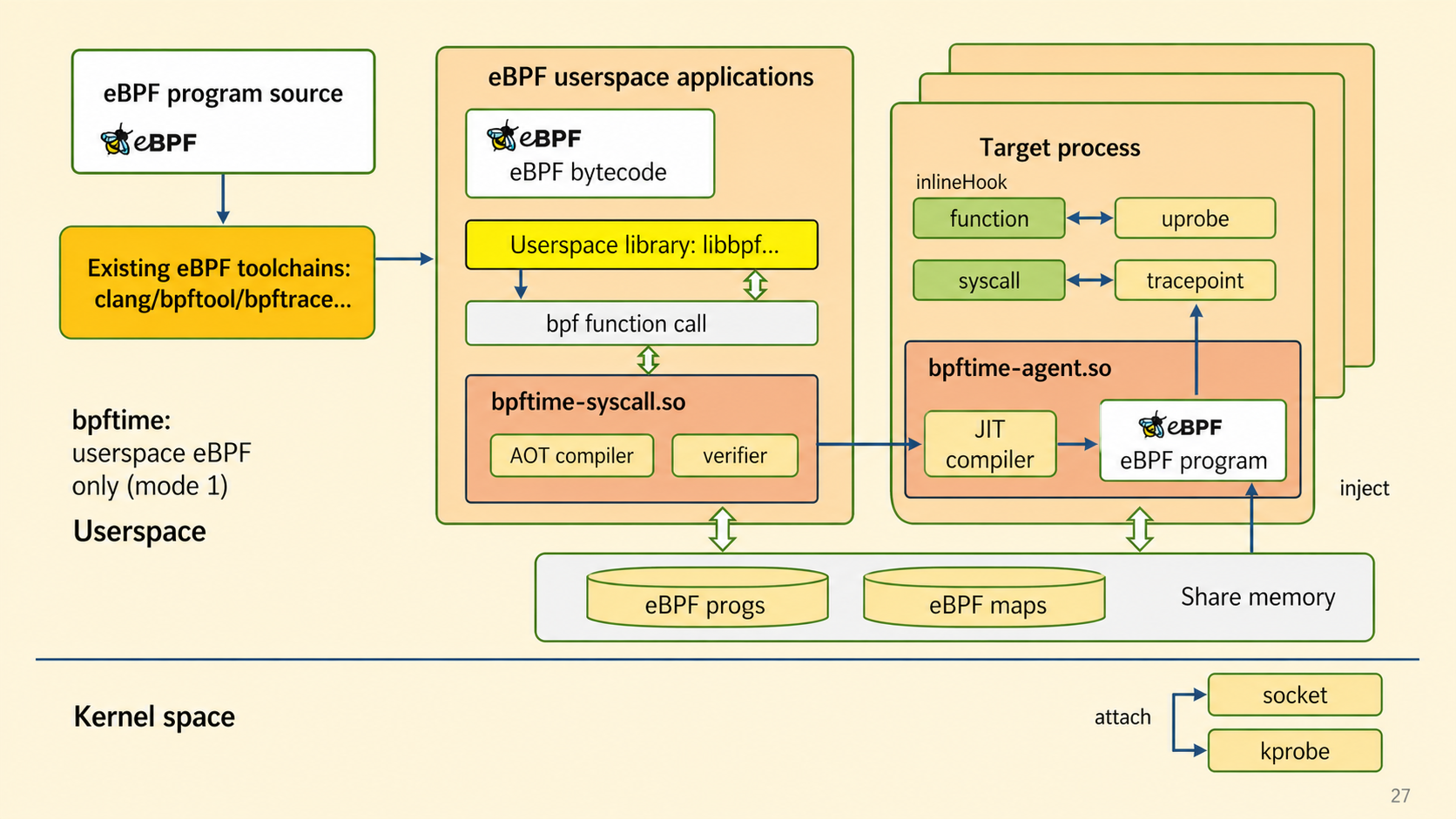
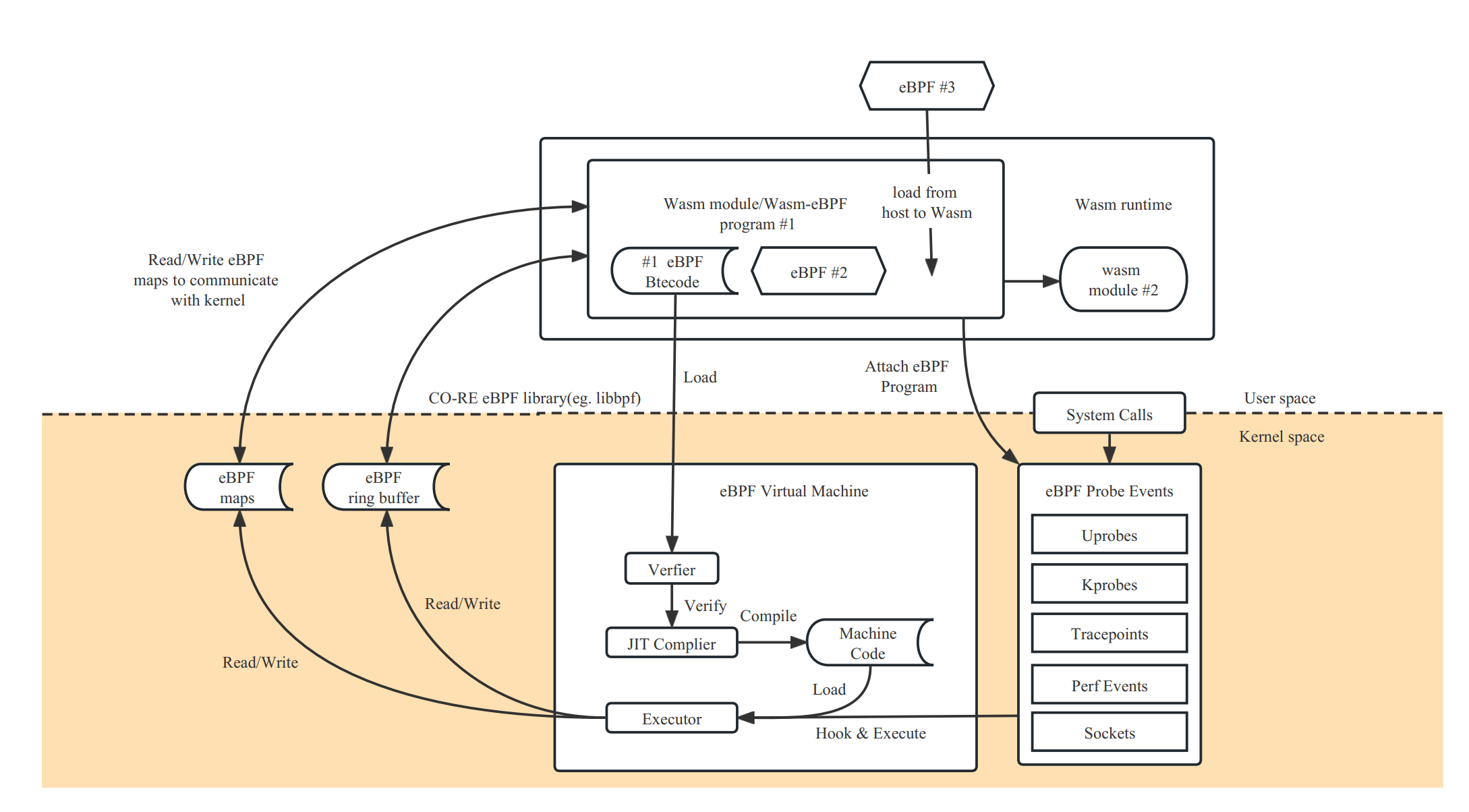
Run, instrument, and extend systems with userspace execution paths, GPU paths, JIT/AOT support, and deployment models that fit production tooling.
Open-source infrastructure
Open-source eBPF infrastructure for runtime extension, GPU tracing, and AI Agents.
Runtime infrastructure, public resources, and AI agent systems define the work behind Eunomia.
Runtime extension
Run, instrument, and extend systems with userspace execution paths, GPU paths, JIT/AOT support, and deployment models that fit production tooling.
Resources
Maintain executable tutorials, documentation entry points, technical writing, and research artifacts for eBPF builders.
AI Agents
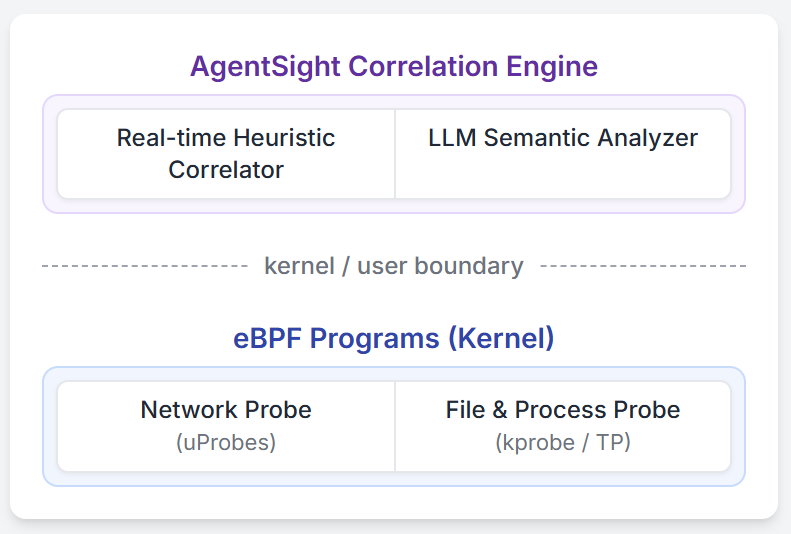
Zero-instrumentation, framework-agnostic visibility into what agents actually do, plus runtime enforcement for what they are allowed to do.
Open-source platform projects and public resources grouped by how people use them.
Execution engines, toolchains, runtime components, and low-level extension paths.
Tracing, observability, and safety work for AI agent systems.
Tutorials, documentation, blog posts, and research papers for eBPF builders.
Why eBPF Verifier Errors Are Hard to Fix: The Diagnostic Gap
A study of 235 reproduced eBPF verifier rejections shows that the terminal error identifies where verification stopped, not where the program lost the proof the verifier required. bpfix reconstructs the proof lifecycle from the verifier log to close the diagnostic gap.
From Tokens to Verifiable Work: Agent Infra Is Rewriting Its Unit of Measure
As AI agents evolve from single model calls into long-running, multi-tool execution systems, infrastructure must shift from tokens toward verifiable work units that bundle acceptance conditions, execution evidence, total cost, and accountability boundaries.
An Empirical Study: AI Agent Rules Need Context and Layered Enforcement
AI agent rules look simple in CLAUDE.md, but ActPlane's 2,116-statement study shows why context and layered OS enforcement decide what can be checked.